
Compounding · Topicals
Compounded pain and skin creams, made for where it hurts.
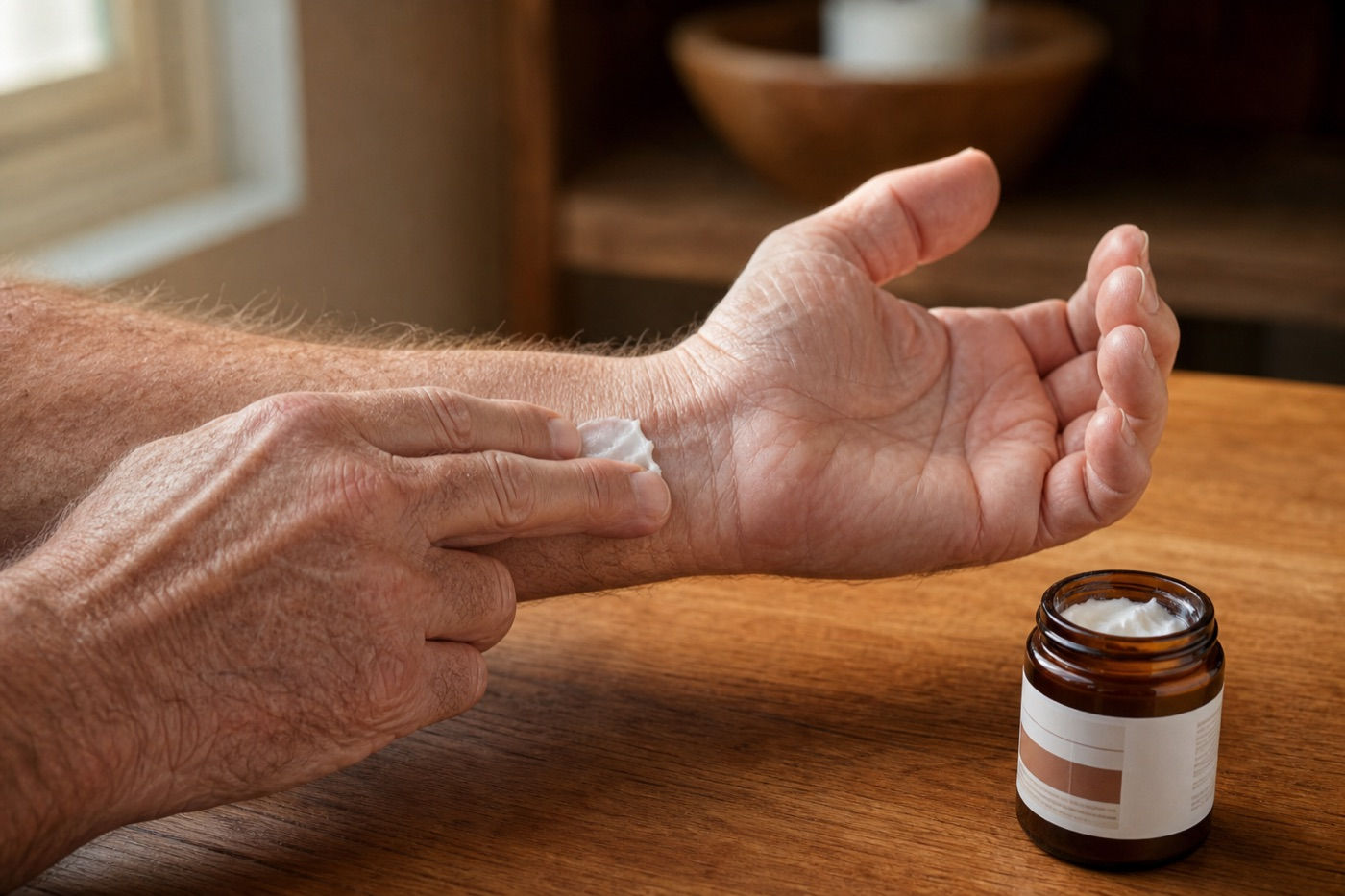
Murray Shore compounds topical pain and dermatology preparations in North York, Toronto, from a prescriber’s formula to a finished cream or gel at our own bench: the prescribed ingredients, in a base your skin will actually tolerate, in a dispenser you can dose consistently.
Form · Base · Strength
What we can change
- Form Cream or gel
A topical preparation applied where the prescription is aimed: a joint, a patch of skin, an area that needs attention, often in a metered pump for consistent dosing.
- Base Chosen for your skin
PLO gel, emollient cream, or a water-free base, chosen with you and your prescriber against your skin history, with dye-free and fragrance-free versions where the formula allows.
- Strength The exact formula
The prescribed ingredients at the strength ordered, turned into a finished preparation that is accurate to the milligram.
Real examples
From problem to preparation
A topical is as much about choice as it is about problems: the base, the strength, and the way it goes on, chosen for you and ordered by your prescriber.
-
The problem Three separate tubes, every single night.
What we prepare Compatible prescribed ingredients combined into one preparation, when your prescriber orders it that way.
-
The problem “Apply a thin layer” means something different every day.
What we prepare A metered pump that delivers a fixed amount per press, so one pump is the same quantity on a tired Tuesday night as it was on day one.
-
The problem Your skin reacts to dyes, fragrance, or preservatives.
What we prepare A gentler base, reviewed against your reaction history, with dye-free and fragrance-free versions where the formula allows.
-
The problem The prescribed ingredient breaks down in the presence of water.
What we prepare An anhydrous, water-free preparation that protects it.
Step by step
How it works
- Bring us the prescription. Your prescriber sends the formula, or you bring it in, along with your skin history and anything that has caused trouble before.
- We choose the base together. With you and your prescriber, we match the formula to a base your skin will tolerate, and confirm anything unclear before compounding.
- Pick up and learn the technique. Two minutes at the counter: how much, where, whether to wash hands or glove afterward, and what to avoid covering.
Go deeper
Bases we build on
The base is the half of a topical compound nobody writes about. We choose it with you and your prescriber, against your skin history.
- PLO gels
- Pluronic lecithin organogel, a workhorse base we use for many prescribed topical pain formulas. It rubs in without a greasy film, which matters when you apply something to the same knee or shoulder every day.
- Emollient creams
- Softer, more moisturizing vehicles that dermatology prescribers often favour when the skin itself is the patient: dry, cracked, or irritated areas that need the base to be as gentle as the formula.
- Anhydrous bases
- Water-free preparations for prescribed ingredients that break down in the presence of water, or for skin that reacts to the preservatives a water-based cream requires.
- Metered pumps
- Many of our topical compounds go home in a dispenser that delivers a fixed amount per press, so "apply one pump" means the same quantity every time.
When the skin itself is the problem
Reactive, broken, or eczema-prone skin changes the assignment. For these patients we lean on gentler vehicles, leave out dyes and fragrance where the formula allows, and keep a record of every base that has and has not worked for you, so each refill starts from knowledge instead of from zero.
Dealing with eczema or dermatitis right now? Our pharmacists also assess and, where appropriate, prescribe for it under Ontario’s minor ailments program. Read about eczema and dermatitis assessments.
Every topical we prepare is compounded under the NAPRA Model Standards for Pharmacy Compounding of Non-sterile Preparations, the national standards Canadian pharmacy regulators publish for this work. The document is linked in the sources note below.
Topical compounding questions
What is a compounded pain or skin cream?
A topical preparation we make from scratch for one person: the ingredient and strength your prescriber ordered, worked into a base chosen to suit your skin and the way you will use it. It exists because a factory tube with those exact contents does not.
Can several of my prescribed medications go into one cream?
Where the ingredients are compatible and your prescriber orders it that way, yes. Combining prescribed ingredients into a single preparation can turn a three-step routine into one, which is often the difference between a routine that happens and one that does not.
Why did my prescriber choose a cream instead of a tablet?
That reasoning belongs to your prescriber, and it varies by person and situation. What we can do is walk you through exactly what they ordered, how to apply it, and what each ingredient in the preparation is.
My skin reacts to everything. What are my options?
Tell us what has caused trouble before, even if you only remember the brand. We can review the non-medicinal ingredients of a proposed base against that history, and prepare dye-free and fragrance-free versions where the formula allows.
How do I apply a compounded topical properly?
Follow the label, and let us show you at pickup: how much, where, whether to wash hands or wear a glove afterward, and what to avoid covering. Two minutes at the counter prevents most application problems we ever hear about.
How long does a compounded cream last, and how should I store it?
Each preparation is labelled with its own beyond-use date and storage directions, assigned when it is made. A compound’s dating is specific to that formula, so do not borrow expectations from a manufactured tube.
Is a compounded cream covered by my drug plan?
Plans differ in how they handle compounds, and some cover the ingredients but not the preparation fee. Bring your benefits card or call us with the plan details and we will check before anything is made, so the price is never a surprise.
Curious what else can be compounded? See the full compounding service.
Sources
Your pharmacist is one call away.
416-789-1800 Call nowPrefer not to call? Email info@murrayshore.com or visit us at Bathurst & Baycrest.